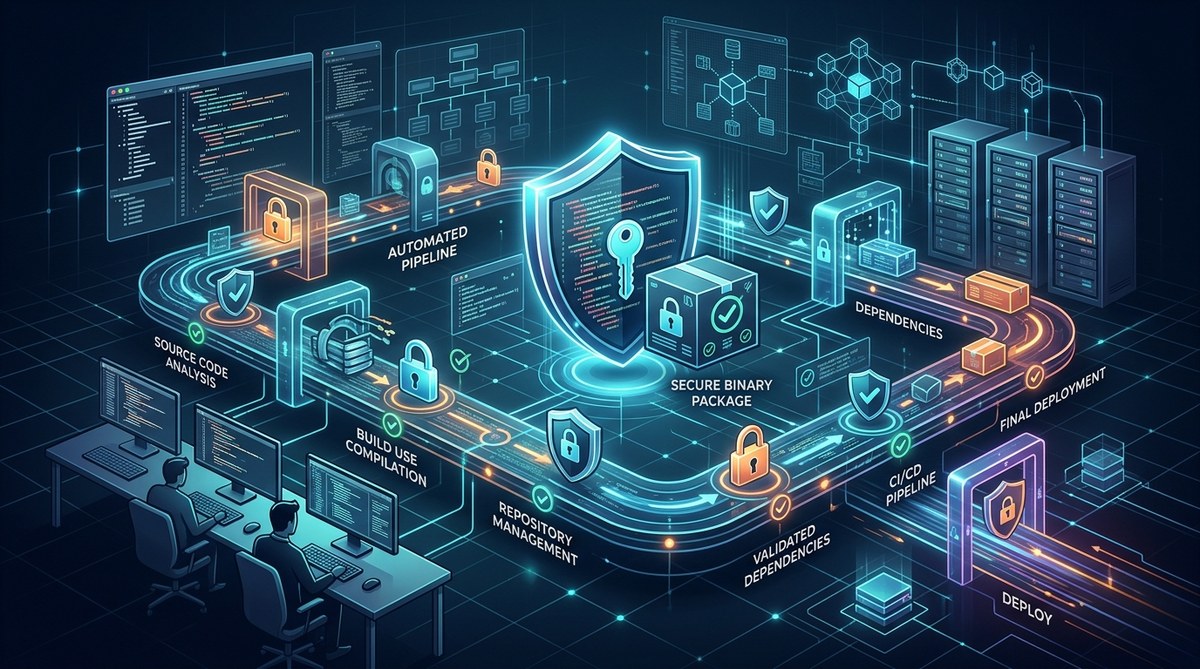

Software supply chains touch every line of code and every deployment. From open source libraries to vendor SKUs and cloud services, modern software depends on a complex web of external and internal components. When a single link in that chain weakens, the entire product becomes exposed to risk. In today’s fast moving tech landscape, securing the software supply chain is not a nice to have, it is a foundational discipline. This article is written for builders, operators and policy makers who want practical guidance that aligns with lifecycle management, governance and compliance. You will find concrete steps, governance ideas and a path to measurable improvement that fits within modern engineering practices.
What is software supply chain security
Overview
Software supply chain security is the set of practices that protect every stage of the software supply chain from origin to production. It includes how code is authored, built, tested, packaged, distributed and deployed. It also covers the people, processes and tools that influence those stages. The goal is to reduce risk by ensuring integrity, authenticity and reliability of software components as they flow through development, testing and release.
Why it matters for modern software engineering
- Complex dependencies are the norm. Many products rely on hundreds or thousands of libraries and tools created by different teams.
- Open source usage accelerates innovation but can introduce unseen risks if components are compromised or not kept up to date.
- The deployment surface now spans clouds, on prem data centers and edge devices, increasing the number of environments that must stay secure.
- Compliance and policy requirements are tightening around SBOMs, vulnerability disclosure, and third party risk management.
The landscape of threats
- Compromised dependencies or libraries that get pulled into builds
- Attacks on the build pipeline such as tampered toolchains
- Insecure or misconfigured artifact repositories
- Inadequate software bill of materials that obscure what is inside an artifact
- Third party service provider vulnerabilities impacting your software
Core components of a secure software supply chain
Build and packaging components
- Build systems and toolchains you control
- Compiler toolchains and code signing practices
- Reproducible builds and deterministic artifacts
Dependency and provenance components
- Open source dependencies and third party libraries
- Dependency graphs and SBOM visibility
- Version pinning and lock files
Distribution and deployment components
- Artifact registries and distribution channels
- Deployment pipelines and infrastructure as code
- Runtime environments and update mechanisms
Governance and policy components
- Security policies for sourcing, signing and release
- Third party risk management programs
- Compliance reporting and auditing
Observability and response components
- Logging, alerting and forensics data
- Incident response playbooks for supply chain events
- Chaos engineering and resilience testing for supply chain faults
How attacks occur and what to defend
Common attack vectors
- Malicious or compromised open source components entering the supply chain
- Infected or tampered build tools and CI systems
- Weak or stolen credentials enabling unauthorized access to repositories
- Shadow dependencies created during automated updates
- Insecure third party services that the pipeline relies on
Defensive patterns
- Enforce strong identity and access management for all supply chain actors
- Require cryptographic signing for code, artifacts and updates
- Implement SBOM driven governance to expose every component
- Harden the build environment and enforce reproducible builds
- Conduct continuous supply chain testing including chaos experiments
Real world signals
- Sudden spike in reported vulnerabilities in dependencies
- Unexpected changes in build tool signatures or chain of trust
- Missing or inconsistent SBOM metadata for artifacts
Standards and frameworks you should know
NIST and government guidance
- NIST guidance on software supply chain security and SBOMs
- NIST SP 800 53 style controls for integrity and supply chain security
- CISA resources and SBOM related guidance
SBOM and visibility standards
- The importance of machine readable SBOMs for automation
- How SBOMs support risk assessment and vendor management
- Aligning SBOM formats with your governance needs
Industry alignment
- Standards and best practices increasingly adopted across industries
- How to map policy requirements to engineering processes
- The role of auditing and reporting to customers and regulators
The practical value of SBOMs
What an SBOM is
A software bill of materials is a formal, machine readable inventory of all components in a software product. It includes licenses, versions and provenance so you can understand what you are shipping.
How to use SBOMs across the lifecycle
- Discover dependencies early with software composition analysis
- Pin versions and lock files to prevent drift
- Monitor for vulnerability advisories and supply chain events
- Communicate risk to customers and partners with clear provenance
- Automate remediation workflows when components are flagged
SBOMs in action
- In build pipelines, SBOMs become part of artifact metadata
- In deployment, SBOMs help operators know exactly what is running
- In governance, SBOMs support vendor risk management and compliance reporting
Securing the build pipeline and artifacts
Build pipeline hardening
- Use trusted, auditable build agents and version controlled configurations
- Pin tools to known good versions and sign the toolchain itself
- Enable reproducible builds so that the same source yields the same artifact every time
Artifact management
- Sign all artifacts at build time and verify signatures during deployment
- Use secure artifact registries with access controls and provenance data
- Implement integrity checks to detect any tampering
Dependency management
- Prefer well maintained, actively updated dependencies
- Lock dependencies to fixed, known good versions
- Regularly scan for vulnerabilities and license issues
Identity, access and governance
Identity and access management
- Enforce least privilege for all accounts involved in the supply chain
- Use strong multi factor authentication for critical pipelines
- Rotate credentials and keys regularly
Code signing and trust
- Sign commits, builds and deliveries
- Maintain a robust key management process for signing keys
- Periodically rotate signing keys and retire compromised ones
Third party risk management
- Vet suppliers and content providers with security questionnaires
- Require security commitments and incident reporting from vendors
- Include supply chain security expectations in procurement contracts
Testing, monitoring and incident response
Testing strategies
- Static and dynamic analysis (SAST/DAST) to catch issues early
- Software composition analysis (SCA) to identify vulnerable dependencies
- Software provenance testing to verify chain of trust
Runtime and operational monitoring
- Telemetry that can detect unexpected changes in deployed components
- Continuous verification that deployed artifacts match SBOMs
- Anomaly detection for unusual deployment patterns or updates
Chaos engineering for supply chain resilience
- Run controlled perturbations in production like tampering of non critical components
- Measure MTTR and the effectiveness of containment and remediation
- Use chaos experiments to test rollback, failover and recovery plans
Incident response readiness
- Documented playbooks for supply chain incidents
- Clear escalation paths and communication plans
- Regular drills to keep teams prepared
Integrating supply chain security with lifecycle management
Across the software lifecycle
- Requirements and design: consider supply chain risks from the outset
- Development: enforce secure coding and dependency management
- Testing: integrate SBOM and vulnerability testing into CI
- Release: verify signatures, provenance and license compliance
- Deployment and operations: enforce runtime integrity checks
- Retirement and end of life: manage decommissioning of components safely
Aligning with governance and policy
- Tie security controls to policy requirements for transparency
- Document compliance evidence and audit trails
- Create dashboards that show supply chain health metrics to stakeholders
A practical implementation plan you can adapt
1) Assess where risk lives in your chain
- Map all components from source code to deployment
- Identify critical pipelines and high risk dependencies
- Catalog existing signing, verification and SBOM capabilities
2) Plan a phased improvement program
- Prioritize fixes that reduce largest risk exposure
- Define success criteria and measurable outcomes
- Align with a policy and compliance roadmap
3) Implement core controls
- Introduce SBOM generation and automation
- Harden build and release pipelines with code signing
- Enable artifact signing and verification in distribution channels
- Start dependency and supply chain risk monitoring
4) Measure and adapt
- Track key metrics such as time to remediate, number of vulnerable components, and SBOM coverage
- Continuous improvement cycles based on incident learnings
- Report progress to leadership and customers as appropriate
5) Sustain and mature
- Regularly audit and refresh policies
- Expand robust controls to edge deployments and data planes
- Integrate process with chaos testing and resilience programs
Roles and responsibilities
- Security and compliance leads: define policy, ensure SBOM standards and oversee audits
- DevOps and platform teams: implement signing, reproducible builds, and pipeline hardening
- Developers: adopt secure coding practices, keep dependencies current, and follow SBOM driven development
- Procurement and vendor managers: enforce third party risk practices and contract requirements
- Operations and incident response: run drills, monitor for anomalies, and manage containment
Tools and technology landscape
SBOM and provenance
- Tools to generate machine readable SBOMs
- Solutions to maintain artifact provenance and verify integrity
Build and CI CD integrity
- Secure build environments and trusted toolchains
- Signing infrastructure and validation steps in pipelines
Dependency management and security
- Dependency scanners to identify known vulnerabilities
- License compliance and risk scoring for third party components
Verification and governance
- Runtime integrity checks and policy driven enforcement
- Auditing and reporting dashboards
Edge and deployment considerations
- Edge aware supply chain controls for devices and gateways
- Secure update mechanisms and verification at the edge
Real world style case study and scenario
Imagine a mid sized software provider that ships a critical enterprise application with many open source libraries. A malicious package is introduced into a popular library update. If the company relies on an unverified build pipeline and neglects SBOM management, the compromised code could slip into production. The consequences could include data exposure, degraded service and loss of customer trust.
How might this organization respond using the practices described here?
– They would rely on SBOMs to quickly identify the tainted component and its provenance
– The build pipeline would fail safe when counterfeit signatures are detected
– Access controls would prevent unauthorized changes to critical build configurations
– A chaos engineering experiment would validate that a safe rollback path exists and that the update mechanism does not propagate the breach
– They would communicate with customers about remediation steps and provide evidence of remediation through SBOM and audit logs
Special topics that intersect with supply chain security
Chaos engineering and resilience
Applying chaos engineering to supply chain components helps verify that the system can tolerate and recover from supply chain faults. By testing the system with controlled perturbations in dependencies or tools, teams can observe failure modes and improve recovery plans before a real incident occurs.
Edge architectures and supply chain risk
Edge deployments expand the surface area of the supply chain. Securing edge components requires:
– End to end visibility of software across devices
– Signed and verified updates delivered securely to the edge
– Lightweight, deterministic builds suitable for resource constrained environments
– Operational practices that account for intermittent connectivity
Digital twins and software supply chains
Digital twins used to model complex systems depend on data pipelines and software components. Ensuring the trustworthiness of these components is critical for accurate simulation results and safe operation in real environment deployments.
Green software engineering and supply chain security
Efficiency and sustainability converge with security. By selecting lean, up to date dependencies and minimizing unnecessary components, you reduce both energy consumption and risk. Green software practices aligned with supply chain security may focus on reducing build footprints, using efficient tooling, and avoiding bloated dependencies.
IANA time zone data and external data dependencies
External data feeds such as time zone databases are often included as components or data references in software. Keeping these data sources up to date and verifiable is a reminder that your supply chain security extends beyond code to data that software relies on. Proper control over data provenance and update verification is essential.
Why SSTC-Online readers should care
SSTC-Online.org provides a practitioner focused view on policy, compliance and lifecycle management. The guidance above is designed to connect policy expectations with engineering realities. By integrating SBOM management, secure build practices, and resilient operations into your lifecycle, you gain:
– Greater visibility into what you ship
– Stronger prevention and faster remediation for supply chain events
– Clear traceability that supports regulatory and customer expectations
– The chance to align security with broader engineering priorities like edge architecture, digital twins and green software initiatives
At SSTC-Online, we recognize that security is not a single tool, but a program of people, processes and technologies that evolve. The approach described here supports a practical, incremental path that organizations can adopt without disrupting delivery velocity.
Takeaways and next steps
- Start with visibility: generate and consumer SBOMs for all products
- Harden the build environment and protect the chain of trust from code to production
- Implement robust third party risk management and supplier oversight
- Integrate testing, monitoring and chaos experiments to validate resilience
- Tie governance to policy, compliance reporting and customer communications
If you are ready to begin, consider a phased pilot that applies SBOM driven governance to a single product or service. As you mature, extend the program to your full portfolio and edge deployments. The result will be stronger software, clearer responsibility, and a more trustworthy supply chain that aligns with policy, compliance and lifecycle management goals.
You can also explore SSTC-Online.org resources on chaos engineering, modernising legacy apps, edge architectures, digital twins and green software engineering to deepen your understanding and connect supply chain security to broader systems and software engineering practices.
Appendix: quick reference checklist
- SBOM readiness: Do you generate machine readable SBOMs for all artifacts?
- Signature and trust: Are builds and artifacts cryptographically signed and verifiable?
- Dependency hygiene: Do you scan and pin dependencies, with alerts for vulnerable or license problematic components?
- Build environment: Are your toolchains and build agents secured and auditable?
- Access governance: Is access to repositories and pipelines restricted to the fewest possible users with MFA enabled?
- Third party risk: Do you conduct due diligence for suppliers and require security commitments?
- Deployment integrity: Are updates delivered with integrity checks and verifiable provenance?
- Incident readiness: Do you have playbooks and drills for supply chain incidents?
- Metrics and reporting: Do you track SBOM coverage, MTTR, and vulnerability trends?
- Edge readiness: Are you prepared to enforce supply chain security in edge deployments?
With a well designed program and steady practice, securing the software supply chain becomes a core capability that protects your customers, strengthens trust and supports a resilient, policy compliant software lifecycle.